
The Wizard and I (Part 1)
How Wicked turned my black-and-white mindset to full color.

In the Wizard of Oz, Dorothy’s world flips from monochrome to full color. This also happened for me when I saw Wicked as a kid. The show’s powerful message revealed the cracks in my black-and-white fundamentalist world and opened my eyes to a brighter, bolder way of living.
Growing up in an Independent Fundamental Baptist (IFB) Church felt like we were perpetually auditioning for a sweet 1950s TV show. Like Leave It to Beaver but with more guilt. We created a cookie-cutter picture of the model American family. Father, mother, children. All in a line, modestly dressed, looking just dandy.
The aesthetic was so sweet and lovable. Picture-perfect. The kind of world that only exists when someone is pulling the strings.
Everyone pretty much had the same haircut as kids. Girls had what I affectionately call the Baptist Bangs (if you know, you know). And boys always had their hair cut above their ears. That was a rule.
Looking back, and for the sake of the metaphor, we all kinda looked like we belonged in Munchkinland. Our very own cute little world.
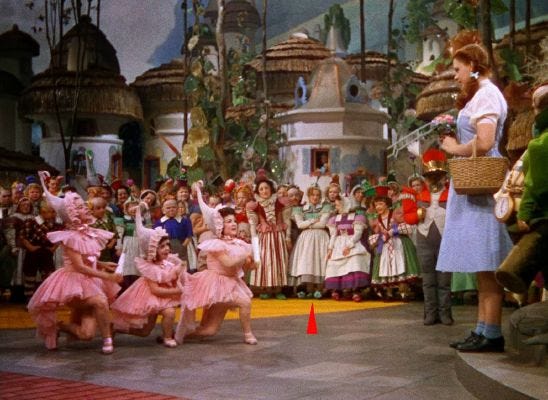
Life in a bubble is cozy, safe, and predictable. It feels like you’re floating above the rest of the world in moral superiority, and that feels good. But it can also feel like you’re suffocating under the pressure of all that hot air from people’s inflated egos.
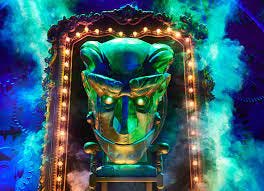
The typical IFB church was a complex system of moralism. And behind the curtain, pulling the levers, was the great and powerful Wizard of Oz—the Pastor.
His voice would roar from behind the pulpit. Red in the face. Shaking with anger. Stomping and thumping the Bible. He’d shout about how we were all evil sinners, how the world was wicked, how we needed to follow the rules. As a kid, this was terrifying. The yelling was a stark contrast to our sweet, innocent everyday lives.
We had so many rules. Rules about music. What to watch. Where to go. Countless body-shaming modesty rules for women. (That list is truly endless, so here’s the link to a podcast episode about it!) But basically, women couldn’t wear pants, only skirts that went below the knee. No sleeveless tops either. High necklines, close-toed shoes, and nylons were the way we kept our bodies covered in order to not tempt the men. Because nothing says purity like baggy clothes and extra layers in the Southern California heat.
The only music allowed was hymns, hand-picked Christian songs, or classical music. No music with a beat, because that’s how the devil sneaks into your soul and makes you dance. Luckily, my parents were considered “relaxed” and let us get wild with some Disney music or Casting Crowns every once in a while. We liked to live life on the edge.
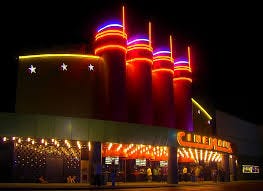
And then there was the BIG one: movie theaters. They were a sin. Why? No clue. I remember in our town, the movie theater was across the street from In-N-Out. We'd grab burgers after church when I was a kid, and I'd stare across the street like I was looking at the gates of hell itself. My mental image of a theater was the most wicked thing I could imagine. A den of iniquity where all the goth kids wore black nail polish, ate popcorn, and kissed before marriage in the back rows. That’s how girls got pregnant. I swore.
No wonder it’s called the Cinema. I’d think to myself. “Sin” is in the name. They’re not even trying to hide it.
Most of these rules tie back to the widespread fear of everything outside the church—fear that was especially prevalent during the Satanic Panic of the 1980s and 90s. This period fueled fears of evil lurking in unexpected places, from music to movies, and Christianity Today’s recent podcast Devil and the Deep Blue Sea touches on how fear drove this mindset:
“The devil doesn’t need to be real when fear is running the show.”
That sums it up perfectly. Fear ran the show. We were afraid of everything from women and girls’ bodies to Tuesday afternoon matinees at Cinemark.
So you can imagine my shock the first time our family went to a theater of any kind. I was eight, and we had just spent the day in Los Angeles exploring the Griffith Observatory. Days like this were so fun, and in my parent’s classic fun-family-day-fashion, they had a surprise for us.
“We’re going to the theater to see Wicked!”
My body tensed up. Theater and wicked were two words my parents weren’t normally excited about. What was happening? I looked at my parents like they were losing their minds.
My dad explained to us kids that we weren’t going to see a movie, but a play.
Whew! I was not about to let my family backslide.
He explained that the title Wicked wasn’t as bad or scary as it sounded. It was a broadway musical about The Wizard of Oz. Which I’d also never seen. I was still doubtful and scared that we were going to let some kind of satanic influence into our minds.
We still had a few hours before the play started. So to ease my fears, Dad found the nearest Blockbuster and rented a copy of The Wizard of Oz. We watched it in the back of our minivan in the parking lot of the Pantages Theater. It was such a fun, bewildering experience.
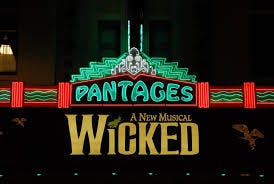
Suddenly, my family was going to theaters, watching a play called Wicked about witches and magic, AND it was a musical with non-Christian lyrics. All in one day. What would pastor think? Did he know we were doing this? It felt strange and exciting. And to rock my world even more, the musical opens with this question:
Are people born wicked, or do they have wickedness thrust upon them?
Right off the bat, I was sure I knew the answer to this question. Duh. We’re born wicked evil sinners. Wow, Pastor was right. This is what happens when we go to theaters. Our faith gets attacked. Great job, Mom and Dad.
I was such a judgy kid. But as the show went on, I felt differently.
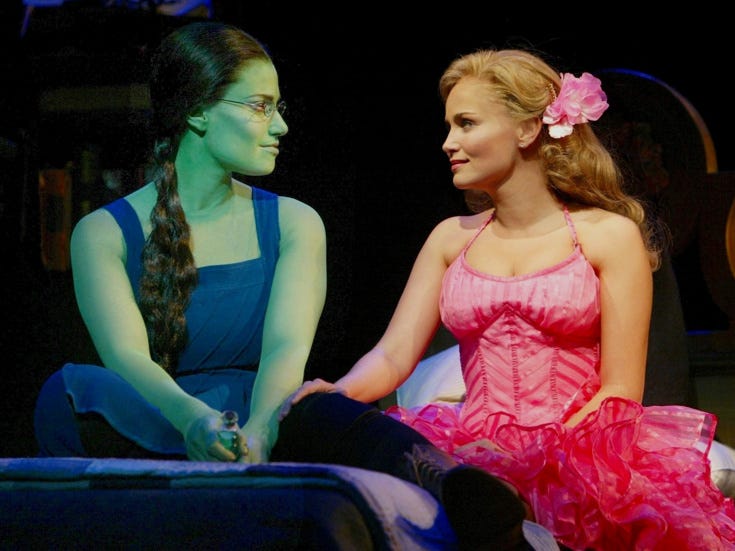
I felt so seen. Both Elphaba and Glinda offered me a vocabulary for my inner world. It felt like watching the two versions of myself, each pulling me in different directions. Both of their lives were controlled by The Wizard, and each of them had a completely different ending.
Glinda, with her sparkles and bubbly positivity, made me want to fit in. She kept her voice childlike, and she valued popularity over challenging systems. She became a face of positivity and hope for the people of Oz. And ironically, she traveled by bubble. She was well-meaning, harmless, and lovable.
Elphaba made me want to be myself, no matter the cost. She had big dreams and ambition, but she hid her body under long sleeves and drab dresses. She felt constantly caught between shame and indifference. Everywhere she went, she felt out of place.
As a girl who’d just spent all day at the Griffith Observatory wearing mid-calf culottes, watching hoards of public school girls walk past in their cute jeans and sleeveless tops—I saw part of myself in Elphaba.
Her struggle wanting to belong, yet refusing to conform, felt like an answer to questions I didn't know I had. I caught a glimpse of what it looked like to challenge systems, even if I didn’t fully understand what that meant yet.
She was mesmerizing. And when she defied the wizard, all I could think was: She can DO that?!
For the first time, I realized the man behind the curtain was just that—a man. Not some all-powerful force. And I watched a woman be the first to call him out, refusing to play along with his illusion.
When the show ended, we stuck around the back to get our Playbills signed. And there she was—Teal Wicks. The Elphaba I’d been watching in awe. She was so cool. Like, the kind of cool where I wanted to immediately BE her. Every night, she got to play this brave character who wasn’t afraid to be misunderstood. Every night, she got to pull back the curtain, turn the world from black and white into full color, and make people question everything they thought they knew.
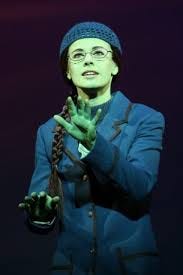
Dad got us the Wicked soundtrack and uploaded it to my hot pink iPod Shuffle. (Peak 2000s nostalgia!) I’d plug in those earbuds, clip that iPod to my shirt, and memorize every line backward and forward. I was completely obsessed with the story, the music, the characters. The complexity of it all. The idea that someone labeled wicked could actually be good.
I knew something had shifted. Colors were brighter, my questions were louder, and the world I once thought was black and white now shimmered with shades of gray—and green.
The next Sunday, my heart carried Elphaba and Glinda with me to church. I wore a pink dress and added a tiny green hair clip. To everyone else, I looked like my bubbly self. But my green hair clip symbolized secret boldness.
Like I mentioned before, we had our own Wizard at church. We called him pastor. He loomed large, yelled a lot, and thought rebellious women were witches too. He stood behind the pulpit like the great and powerful Oz, pulling levers, declaring what was holy and what wasn’t.
The next time I felt berated by someone teaching the doctrine of total depravity, Glinda’s question rang out in my mind. Are people born wicked? Or do they have wickedness thrust upon them?
The next time our pastor predictably turned red in the face yelling that we were a, “Hell-preaching, Bible-believing, Sin-hating, devil-fighting Fundamental Baptist Church,” I felt a twinge of defiance and hummed my favorite lyrics:
Loathing. Unadulterated loathing.
For your face, your voice, your clothing!
I didn’t know what it meant to loathe someone at eight years old, but those lyrics somehow felt fitting when his head was reeling, his face flushing, and the veins popped out of his neck.
The next time he body-shamed women and yelled things like this:
There’s a reason that women’s skirts here are going to come down below their knee. I’ve counseled too many men to know that if [women] don’t have everything covered just right, the men aren’t gonna be thinking about the wonderful grace of Jesus.
I didn’t let fear or shame grip me. Instead, I sat back, tuned him out, and doodled the lyrics to Defying Gravity. For the first time, while the pastor yelled until smoke practically came out of his ears, I wasn’t scared.
I smirked to myself, the way I imagined Elphaba would.
Smoke and mirrors. Like the wizard.
If you want to comment, tell me: What’s one piece of literature or art that flipped your world from black-and-white to full color?
⭐️STAY TUNED⭐️ Part two is coming out next week!
Great read! I have seen the movie wicked 30 times and I am so thankful that I am now flying free! 🩷💚
Every. Single. Time. I read one of your posts, I feel all the things. And in the end, I want to do more than I'm already doing to defy the kind of Wizardry that has so damaged Christianity and now society itself. You are brave and intelligent and well-informed and downright funny. I want to be you when I grow up.